 We live in times that tend to emphasize the physical and the material. And this affects even those of us who strive to have a spiritual life. Too easily we assess our blessings in ways that emphasize the material more so than the spiritual. We feel blessed if our income is good and our physical health intact, but many seem to have little esteem for spiritual gifts like wisdom (which often comes from suffering), knowledge of the truth, and fortitude or courage.
Our prayers often skew heavily toward asking God to improve our finances, mend our health, or alleviate some discomfort in this world. While it is not wrong to pray for these sorts of things, at times it almost sounds as though we are saying to God, “Make this world comfortable enough for me and I’ll just stay here forever.” We’re a little bit like the older son in the story of the Prodigal Son, who wants a kid goat so he can celebrate with his friends rather than to go into the party and celebrate with his father (Luke 15).
But the true goal in life is not to celebrate with our friends, it is to celebrate with the Father! Yet you’d never know it from the way many pray. “King Jesus is a-listening” all day long just to hear some sinner pray for wisdom, greater love for God, deeper prayer, greater longing for spiritual things, chastity, generosity, proper priorities, and so forth.
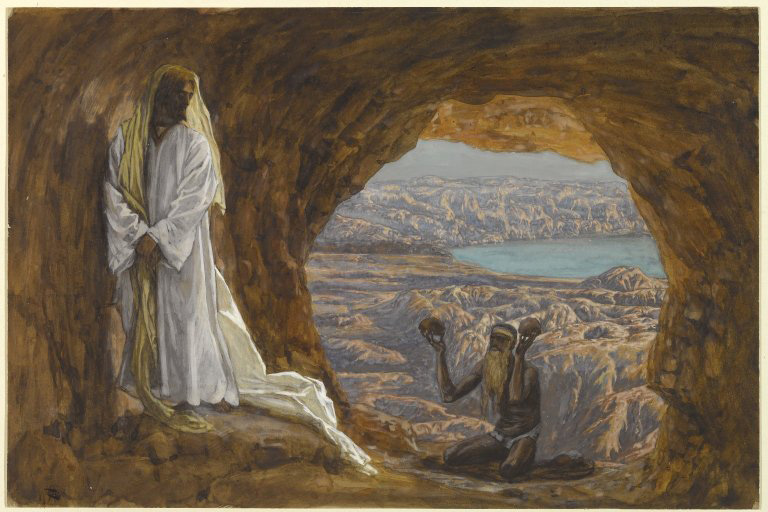
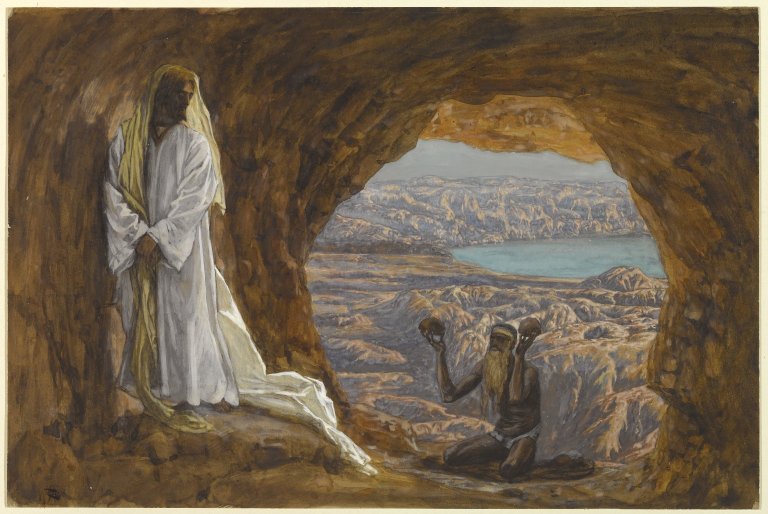
We also see something of this in the first temptation in the desert: Satan tries to tempt the hungry Jesus to turn stones into bread. Satan’s goal is to try to distract Jesus from His fundamental mission as Redeemer and to have Him use His power to satisfy His own physical hunger rather than to liberate souls.
In and of itself, satisfying hunger is not evil. We all need to eat in order to have the strength to do what God asks. But Jesus, of course, had gone into the desert to fast as a way to strengthen His soul and prepare for His mission.
There are things that are simply more important than bodily hunger and other physical needs. Ultimately, the needs of our soul are more important than those of our body. And thus if food or drink or sex, while not evil in themselves, endanger our soul or hinder our spiritual mission, they should be refused.
Jesus counters Satan by saying that “man does not live on bread alone, but on every word that comes from the mouth of God.” Bread alone, the physical world alone, does not satisfy our needs. Man’s life does not consist in possessions (Lk 12:15). We are not only physical beings; we have a soul that it has its hungers, and the Word of God must answer these hungers.
This is balanced. But Satan would have us off balance; he would have us overly concerned—even obsessed with—the needs of the body and other worldly concerns.
Parents, for example, often pay close attention to the academic grades of their children, but many show little concern for the spiritual lives of their children or important aspects of their moral lives. Our culture shows great concern for overcoming physical maladies such as heart disease, AIDS, cancer, and so forth, but there’s little attention paid to the spiritual and moral maladies that often underlie many of our social ills and even contribute to our physical illnesses.
Jesus does not deny that there is a place for bread and the physical needs and daily life that the bread symbolizes. He merely says that man does not live by bread alone, and that the Word of God, the truth of God, the beauty, the holiness, and the glory of God, is also to be food for our soul.
Father Livio Fanzaga has eloquently written,
With the cutting sword of the Word of God, Jesus removes the mask of one of the most current and devastating Satanic lies. Man is not an animal trapped in the short-term cycle of matter. He is a spiritual being who needs to find divine truth even before material food. Never before as in our time Satan has taken succeeded in promising happiness through material good … Man is reduced to the hungers of his body … [And thus] the liar succeeds in depriving man of his dignity, his beauty, his greatness, and his immortal and divine destiny (The Deceiver, p. 118-119).
For the Church, too, there are great temptations in this materialistic time. Great esteem is given to the corporal works of mercy such as feeding the sick, clothing the naked, and so forth. It is clear that these are important, necessary, and glorious works without which we cannot be saved (Matt 25:31ff). And yet, seldom are the Spiritual Works of Mercy mentioned today in Church settings. But they are essential and, frankly, foundational to the corporal works of mercy.
Here too, Father Fanzaga has much wisdom for us:
Satan’s temptation to turn stones into bread quote is a permanent temptation for the Church until the end of time. The Church is certainly placed in this world and shares its joys and sufferings, hopes and defeats … The Church has always promoted the human growth of society, but her ends are the eternal salvation of souls. The temptation to secularize the Church, orienting her towards human promotion and removing her from her supernatural objectives, is among the most subtle and insidious. This temptation has led many parishes and religious communities to abandon prayer, catechesis, sacrifice and the supernatural means of the apostolate, involving themselves in social activities that empty the Christian presence of its meaning … [It is an] earthly messianism, a Christianity reduced to humanitarian religion, a Church that becomes a sort of Red Cross of the world (The Deceiver, p 117).
It is the subtle purpose of Satan to distract the Church from her primary mission so that he can continue to wreak spiritual havoc while the Church’s attention is directed elsewhere.
It is a kind of food fight: Bread for the body rather than the Bread of Life unto eternal salvation. Matter is all that matters. Satan does not trap us with evil, but with what is good yet out of proportion. Bread … bread … bread! Bread is all that matters. Meanwhile the famished soul is neglected.
Jesus rebuked the men of his day who sought him out for another free meal of multiplied loaves: Jesus answered them and said, “Truly, truly, I say to you, you seek Me, not because you saw signs [to have faith], but because you ate of the loaves and were filled. Do not work for the food which perishes, but for the food which endures to eternal life, which the Son of Man will give to you, for on Him the Father, God, has set His seal.” (Jn 6:27).
The bread had become their idol, for they valued it more than the very God who stood before them and provided it in the first place. They had no faith for Jesus, only desire for bread. Properly understood, their desire could have led them to Jesus, but they could not see past the bread to the Bread of Life who stood before them. Indeed not by bread alone, but by every Word from the mouth of God, by the Word made flesh, are we to live.